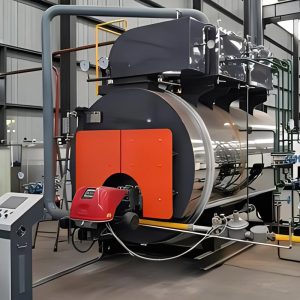
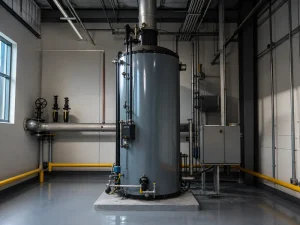
Low-pressure boilers (MAWP ≤15 psig under ASME) suit heating, light food processing, and textile applications. High-pressure systems are necessary when your process demands temperatures or throughputs that 15 psig cannot deliver. For most small-to-mid-size plants running space heating, commercial laundry, or light food warming, a low-pressure boiler delivers lower total cost of ownership. For chemical processing, pharmaceutical clean steam, or power generation, a high-pressure system is typically required regardless of cost preference.
This guide covers the pressure-class selection decision. It does not address electric boiler selection, fire-tube versus water-tube taxonomy, water treatment chemistry, or pipe installation specifications. Pressure class is fixed at manufacture by the stamped MAWP. Specifying by process steam conditions alone — without confirming the classification threshold — can place a facility in the wrong regulatory tier. Verify the applicable standard with your local pressure vessel authority before freezing any boiler specification — starting with what a steam boiler is and how MAWP classification applies to your equipment type.
What “Low-Pressure” Actually Means on the Equipment Label
The low-pressure boiler classification is defined by the stamped Maximum Allowable Working Pressure (MAWP) at manufacture. It has nothing to do with the steam pressure your process happens to be running at a given moment. This distinction matters more than most procurement specifications reflect. In practice, we see it conflated often enough that it creates real regulatory exposure.
Under ASME and equivalent codes, any boiler stamped at ≤15 psig MAWP is low-pressure — whether you run it at 8 psig or 14 psig. A boiler stamped above that threshold is high-pressure, subject to different inspection intervals, operator licensing requirements, and insurance classifications. The classification is permanent. It is tied to the equipment, not to your current operating point. This boundary has held in ASME standards for over a century, rooted in how an industrial steam boiler works at a mechanical and thermodynamic level.
The practical consequence is straightforward. Engineers who specify by process conditions alone sometimes discover mid-procurement that their unit falls into the high-pressure tier. That means the full compliance and staffing burden — before a single part is ordered. Confirming the classification boundary in your jurisdiction before issuing an RFQ eliminates that risk.
One more implication of that 15 psig boundary: low-pressure steam has a saturation temperature ceiling of approximately 250°F (121°C). That ceiling is fixed by physics. Any process requiring steam above that temperature cannot be served by a low-pressure system, regardless of other factors.

Which Industrial Processes Belong in Each Pressure Class
At 15 psig, the ASME boundary splits into two distinct regulatory worlds. Your process temperature determines which side you’re on. Use the table below to self-qualify before engaging vendors.
| Industry / Application | Typical Steam Requirement* | Pressure Class |
|---|---|---|
| Space heating / HVAC | 5–15 psig saturated steam | Low-pressure |
| Commercial laundry | 10–15 psig | Low-pressure |
| Light food warming / proofing | 10–15 psig | Low-pressure |
| Textile dyeing and finishing | 30–100 psig, depending on process | High-pressure |
| Food sterilization (retort) | 15–30 psig typical; verify against FDA guidelines and 3-A standards | Verify against threshold |
| Pharmaceutical clean steam | 20–50 psig typical, subject to ASME BPE; confirm against local pharmacopoeia | High-pressure in most configurations |
| Chemical process heating | 50–600 psig typical; confirm against specific application requirements | High-pressure |
| Power generation | 600+ psig typical | High-pressure |
Typical ranges based on industry practice. Confirm process-specific requirements against applicable standards before specification.
Food sterilization sits at the classification boundary. Confirm whether your sterilization target falls above or below the MAWP threshold in your jurisdiction. Verify the applicable pressure requirement against FDA sterilization guidance or 3-A standards for your specific product. Pharmaceutical clean steam systems almost always require high-pressure boilers, subject to ASME BPE and local pharmacopoeia requirements. Steam boiler selection for the food industry follows a similar verification logic — process type and jurisdiction determine which side of the 15 psig boundary applies.
One infrastructure variable shifts with pressure class. Low-pressure steam occupies more volume per unit of energy than high-pressure steam. More volume means larger pipes. Longer distribution runs require larger-diameter piping and carry higher condensation risk. That adds installation cost and reduces delivery efficiency. In large facilities, this distribution factor sometimes tips the economic comparison toward high-pressure systems — even where process conditions would technically permit a low-pressure classification. Boiler applications in the chemical industry illustrate this tradeoff clearly, where distribution distances and pressure requirements often push selection toward the high-pressure tier.
Does High-Pressure Always Require a Licensed Operator — and What Does That Cost?
Licensed operator requirements for high-pressure steam boilers are jurisdiction-dependent. Many jurisdictions operating under ASME or equivalent codes require a licensed operator present during high-pressure boiler operation. The specific obligation — certification tier, supervision continuity, capacity thresholds — varies by region. Confirm the applicable requirement with your local pressure vessel authority. Where it applies, that staffing obligation is a recurring annual cost, not a one-time fee.
In practice, the two tiers typically look like this:
- Low-pressure boilers in many jurisdictions require only periodic inspection and operator training — not a continuously licensed stationary engineer on shift.
- High-pressure boilers typically require a licensed operator present during operation, with certification tiers (e.g., First Class, Second Class) tied to steam capacity and pressure rating.
A licensed high-pressure boiler operator typically commands a wage premium over a general maintenance technician. Multiplied across three shifts and 50 operating weeks, that delta becomes a significant share of lifecycle operating cost. Across EPCB Boiler projects in varied markets, staffing cost frequently outweighs the capital cost difference when lifecycle cost is the comparison unit. The precise impact depends on local labor rates, shift structure, and regulatory requirements in your jurisdiction.

Total Cost of Ownership: How Pressure Class Shifts the Full Financial Picture
When purchase price is the only comparison unit, low-pressure and high-pressure boilers can look deceptively close in cost. Across four TCO levers, the gap opens substantially for most small-to-mid-size plants.
| TCO Lever | Low-Pressure Boiler | High-Pressure Boiler |
|---|---|---|
| Capital equipment | Lower unit cost at equivalent capacity | Higher unit cost; heavier shell and certification requirements |
| Energy consumption | Comparable at same load; efficiency depends on burner and controls specification | Marginally higher efficiency possible at large scale with superheat capability |
| Inspection and re-certification | Lower frequency and cost in most jurisdictions | More frequent mandatory inspections; higher third-party certification fees |
| Licensed operator staffing | Often not required; reduces annual labor overhead | Licensed operator required where mandated; significant ongoing cost in applicable jurisdictions |
Where 15 psig steam is genuinely sufficient, staffing and compliance cost variables are typically more consequential than the capital price difference. Those differences — eliminated staffing premium, reduced inspection burden, simpler compliance obligations — compound over a 10-year asset life.In many markets, that makes the low-pressure option materially cheaper when lifecycle cost is the metric. Exact figures depend on local labor rates, regulatory requirements, and fuel type — and how much an industrial steam boiler costs across pressure classes gives a baseline for that capital side of the comparison.
Conclusion
The pressure class decision is almost always resolvable before an RFQ is issued. Process temperature ceiling, staffing capacity, and local regulatory boundary together narrow the field to one correct answer for most facilities.
Facilities that defer this analysis to post-procurement frequently absorb compliance and staffing costs that a pre-RFQ assessment would have caught early. In EPCB Boiler’s experience, the pressure-class decision is less complex than it appears. The classification boundary is fixed. The temperature ceiling for low-pressure steam is clear. The compliance consequences of each choice are documented in your local standards. The decision usually comes down to three inputs: process temperature, local regulatory threshold, and staffing structure.
Moving toward an RFQ? Our complete industrial boiler selection guide walks through capacity sizing, fuel type, and compliance requirements before supplier engagement — or contact EPCB Boiler’s engineering team directly for a site-specific TCO model.
FAQ
Do food and pharmaceutical facilities face mandatory steam pressure standards?
Can a low-pressure boiler be upgraded to handle higher pressure later?
What drives the payback difference when choosing low-pressure for a heating application?
Get Your Custom Boiler Solution
Our engineers analyze your requirements and deliver a tailored boiler system — from capacity sizing to fuel optimization.